Energy Management
Store energy for use when the system and equipment allow.

Store clean energy, plan for essential loads, and explore greater control with a system designed around your home.
Battery PlanningPrioritize the loads that matter most.
Storage Fit ReviewMatch battery strategy to your home and goals.
Utility-Aware SetupPlan around rates, outages, and usage patterns.
The role of battery storage
Store energy for use when the system and equipment allow.
Explore how storage can change when energy is used.
Prioritize essential loads with a project-specific design.
Coordinate storage around household priorities.
Discuss load shifting under current utility rules.
Use more locally generated energy when conditions allow.
How storage fits
A battery system can coordinate available solar energy around selected household priorities when the approved design supports it.
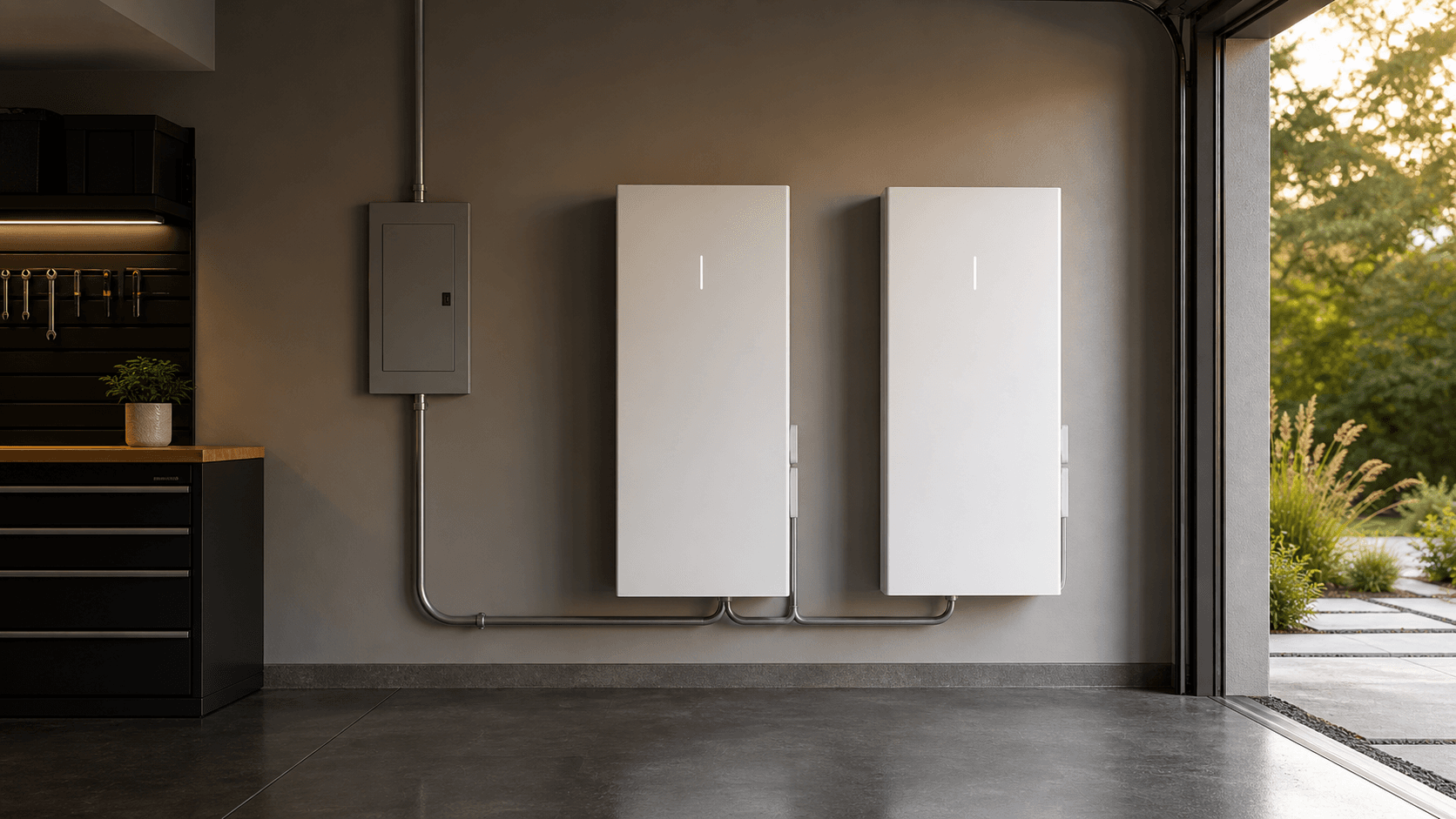
Coordinate available solar energy, storage, household use, and utility service. Outage behavior depends on the approved system design.
Generate Clean Energy
Stores Available Energy
Serves Current Loads
Stay Connected
Property-specific planning
Start with the loads and outcomes that matter, then verify the electrical and equipment details for the property.
Identify essential loads, the desired backup goal, and the duration you want to plan around. Actual backup capability and runtime depend on the approved design, conditions during an outage, and available stored energy.
Power capacity affects what the system can run at one time, while energy capacity affects how much stored energy is available. Both require project-specific review.
Existing versus new solar, electrical conditions, installation location, and equipment compatibility all shape the available configuration.
Prioritize selected loads for outage planning. Whole-home coverage, runtime, and outage performance are not assumed and must be confirmed in the approved design.
Store available solar energy for later household use when the compatible system, operating conditions, and approved configuration support it.
Review whether shifting energy use may fit the current utility rate structure. Savings and rate outcomes are not guaranteed.
Battery cost can vary with usable capacity, power requirements, selected loads, electrical work, installation location, equipment compatibility, and whether storage is added to existing or new solar. Review solar cost and savings factors and compare solar financing options; availability, qualification, payment terms, and savings are not guaranteed.
The final answer depends on the home's loads, electrical conditions, compatible equipment, and approved project design.
It depends on the home's loads, the system's power and energy capacity, electrical configuration, and the approved backup scope. Whole-home capability and runtime cannot be assumed before a property-specific design review.
The number depends on the selected loads, desired backup goals and duration, equipment power and energy capacity, installation conditions, and compatible system design.
It may be possible after reviewing the existing solar equipment, electrical configuration, interconnection requirements, installation location, and current compatibility information.
A properly configured system may isolate from the grid and serve the loads included in its approved backup design. Available energy, load demand, equipment behavior, and outage conditions affect performance; runtime and solar recharge are not guaranteed.
Model availability and compatibility can change. Sunburst confirms currently offered, compatible equipment for the property and project before identifying a model in project documents.
Start with the property, essential loads, electrical conditions, and storage goals.
Primary market architecture
Serving Maryland, Virginia, Washington, D.C., and growing markets across the East Coast and beyond.